

The Best Way to See Koalas in Australia (without Holding Them)
When most people think about seeing a koala, they often picture holding one for a photo or patting one.
For decades, koala cuddles and close encounters have been marketed as one of Australia's most iconic wildlife experiences. Many of us grew up believing that getting close enough to touch a koala (or any animal for that matter) was the ultimate way to appreciate these incredible animals.
Teaching my boys about animal-friendly ways to appreciate and respect animals is something that has been very important to me as a Father. When I was growing up, it wasn’t something that was ever talked about and animal welfare wasn’t at the forefront of most people’s minds. I recently took the family on a koala conservation tour at Phillip Island, and it was a fantastic experience for the family to understand the impacts on koala cuddling experiences, and koalas living in suitable, larger spaces free to roam if they wish.
We all left with a very different perspective.
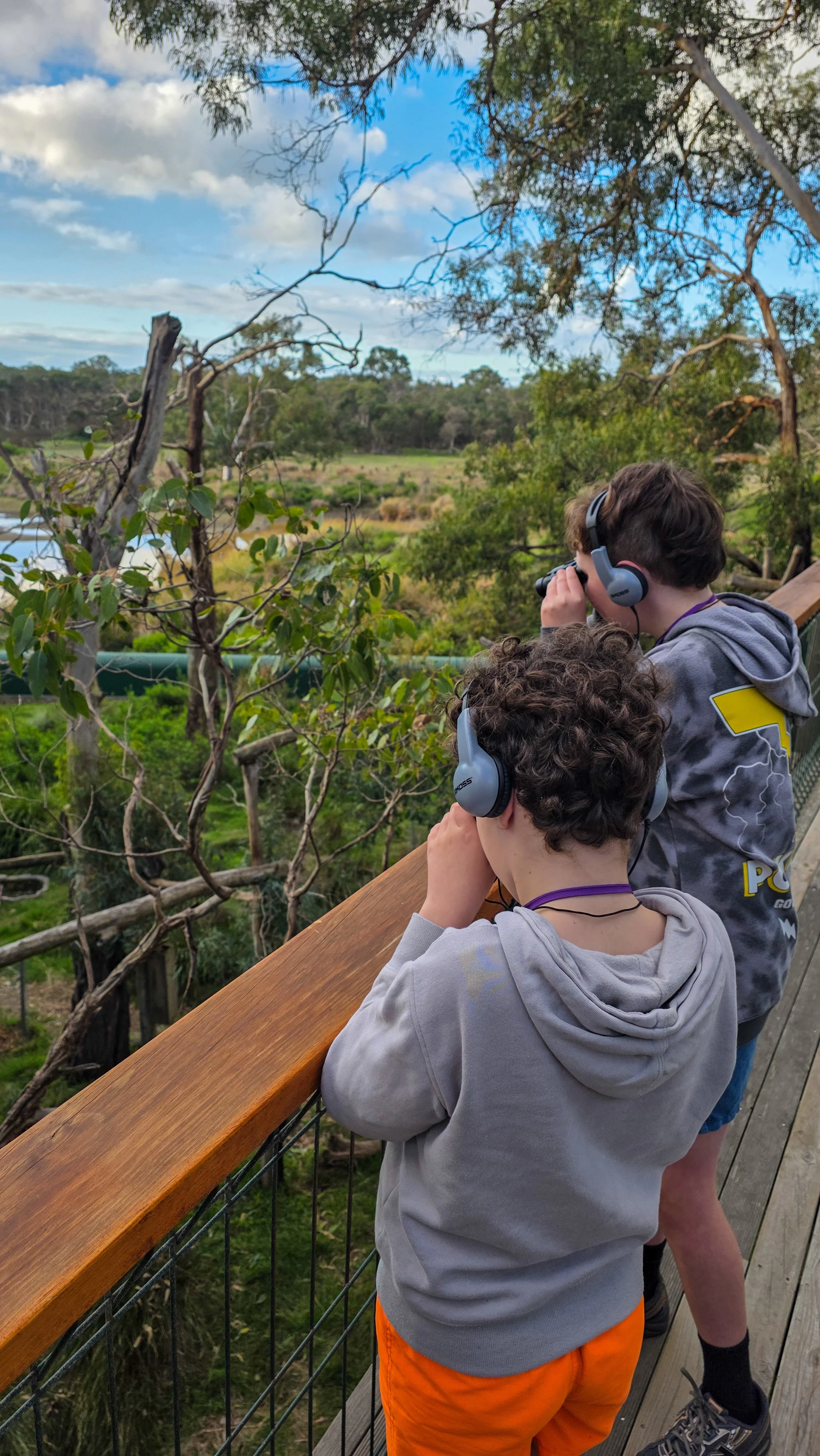
Instead of holding koalas, we spent the day looking for them. We scanned the treetops with binoculars, learned about their natural behaviours, listened to conservation staff explain how they care for the animals, and watched koalas simply being koalas. It was one of the most rewarding wildlife experiences we've had as a family, and the conversations that came out after from my children were truly meaningful.
It reinforced something I've become increasingly passionate about teaching my children: animals don't exist for our entertainment. They deserve to live and behave as naturally as possible, and often the best wildlife experiences are the ones where we simply observe and learn.
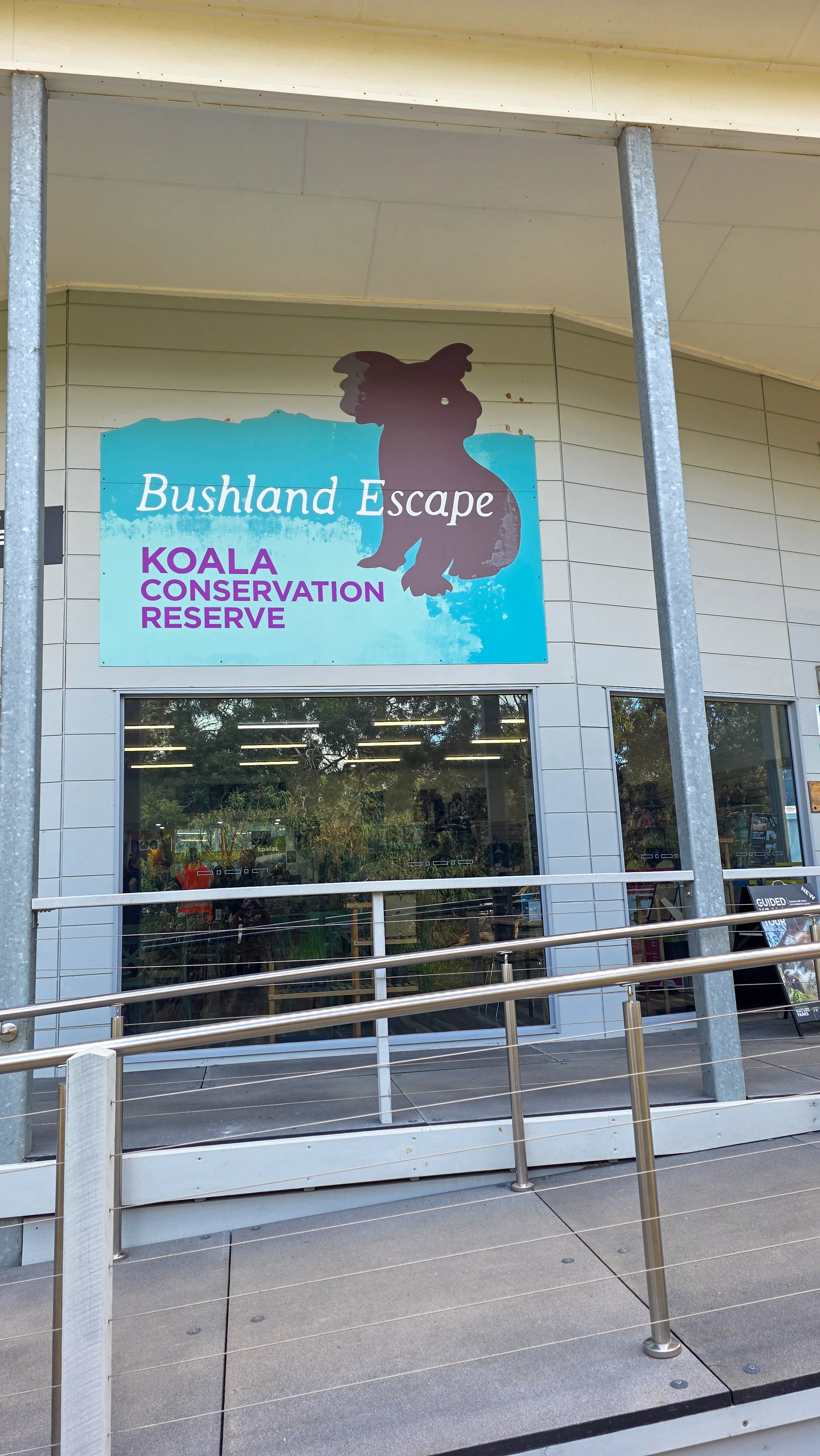
Why We Chose a Conservation Experience
As parents, we're constantly teaching our children how to interact with the world around them.
We teach them to respect other people, respect nature, and care for animals. So when we choose wildlife experiences, I want those experiences to reflect those same values. The conservation tour we attended focused entirely on observation and education.
There were no animal performances.
No forced interactions.
No photo opportunities involving handling wildlife.
Instead, the focus was on helping visitors understand how koalas live, what challenges they face in the wild, and why protecting their habitat is so important. Watching the boys get excited every time they spotted a koala high in a gum tree felt far more meaningful than standing in a queue for a photo opportunity.
They weren't learning how a koala feels to touch.
They were learning how a koala lives.
What We Learned About Koalas
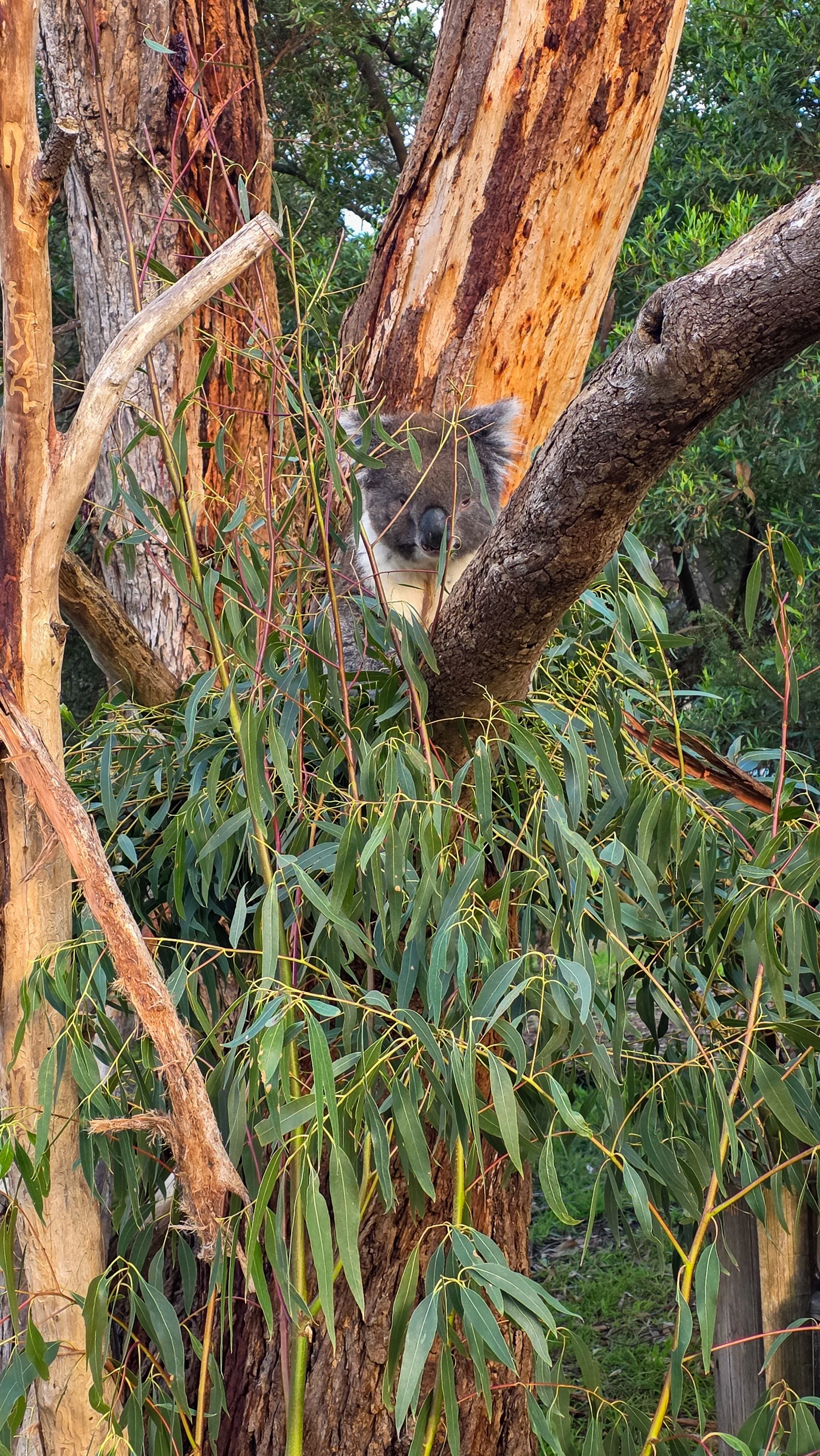
One of the most fascinating things we learned was just how specialised koalas really are.
Koalas spend most of their lives conserving energy. In the wild, they sleep for up to 20 hours per day because their eucalyptus-based diet provides very little energy.
We also learned that male koalas have scent glands on their chest which they use to mark territory, and that they are naturally solitary animals.
Unlike animals that live in large social groups, koalas generally prefer their own space, and this makes close human interaction quite different from their natural behaviour.
One of the conservation staff explained that animals are only handled at the centre when medically necessary, which allows them to spend most of their lives behaving naturally rather than being constantly exposed to visitors.
That approach made a lot of sense to me.
Not all wildlife experiences are created equal.
A good conservation-focused experience puts animal welfare at the centre of every decision. The goal is to educate visitors while allowing animals to maintain as much natural behaviour as possible, in a wild'-like environment.
Unfortunately, some wildlife attractions are built around direct interactions instead.
Whether it's holding, cuddling, feeding, riding or taking selfies with wild animals, these experiences are designed primarily around human entertainment.
According to World Animal Protection Australia, koalas can experience stress when subjected to repeated close encounters with visitors. They may display what researchers describe as "visitor-vigilant" behaviours, including attempting to climb away from people, remaining constantly alert, or showing signs of heightened awareness around human activity.
Research and observations from animal welfare organisations have also identified teeth grinding, known as bruxism, as a common stress-related behaviour in koalas subjected to frequent handling and visitor interactions. While teeth grinding might seem harmless at first glance, it can be a sign of chronic stress and anxiety.
Over time, excessive tooth wear can impact a koala's ability to effectively chew eucalyptus leaves, which is particularly concerning given their already highly specialised diet. Because koalas rely almost exclusively on gum leaves for survival, maintaining healthy teeth is critical to their long-term wellbeing.
What surprised me most was learning that while koalas may appear calm during these interactions, their quiet nature doesn't necessarily mean they're comfortable. As World Animal Protection explains, koalas are wild animals with wild instincts and are not naturally adapted to close contact with humans.
Where is Koala Cuddling Still Allowed in Australia?
Something many Australians don't realise is that koala cuddling is already banned in most parts of the country.
Victoria was the first state to prohibit koala holding and close-contact encounters back in the 1980s, with New South Wales following suit in the 1990s due to growing concerns around animal welfare. Today, Tasmania, South Australia and the Australian Capital Territory also prohibit public koala cuddling experiences.
Queensland remains the only Australian state where tourists can still legally hold koalas for photos and close encounters, although several wildlife parks and tourism operators have voluntarily moved away from the practice in recent years as understanding of koala welfare has improved.
It's an interesting reminder that attitudes towards wildlife tourism continue to evolve. Experiences that were once considered normal are increasingly being questioned as we learn more about animal behaviour, stress, and welfare needs.
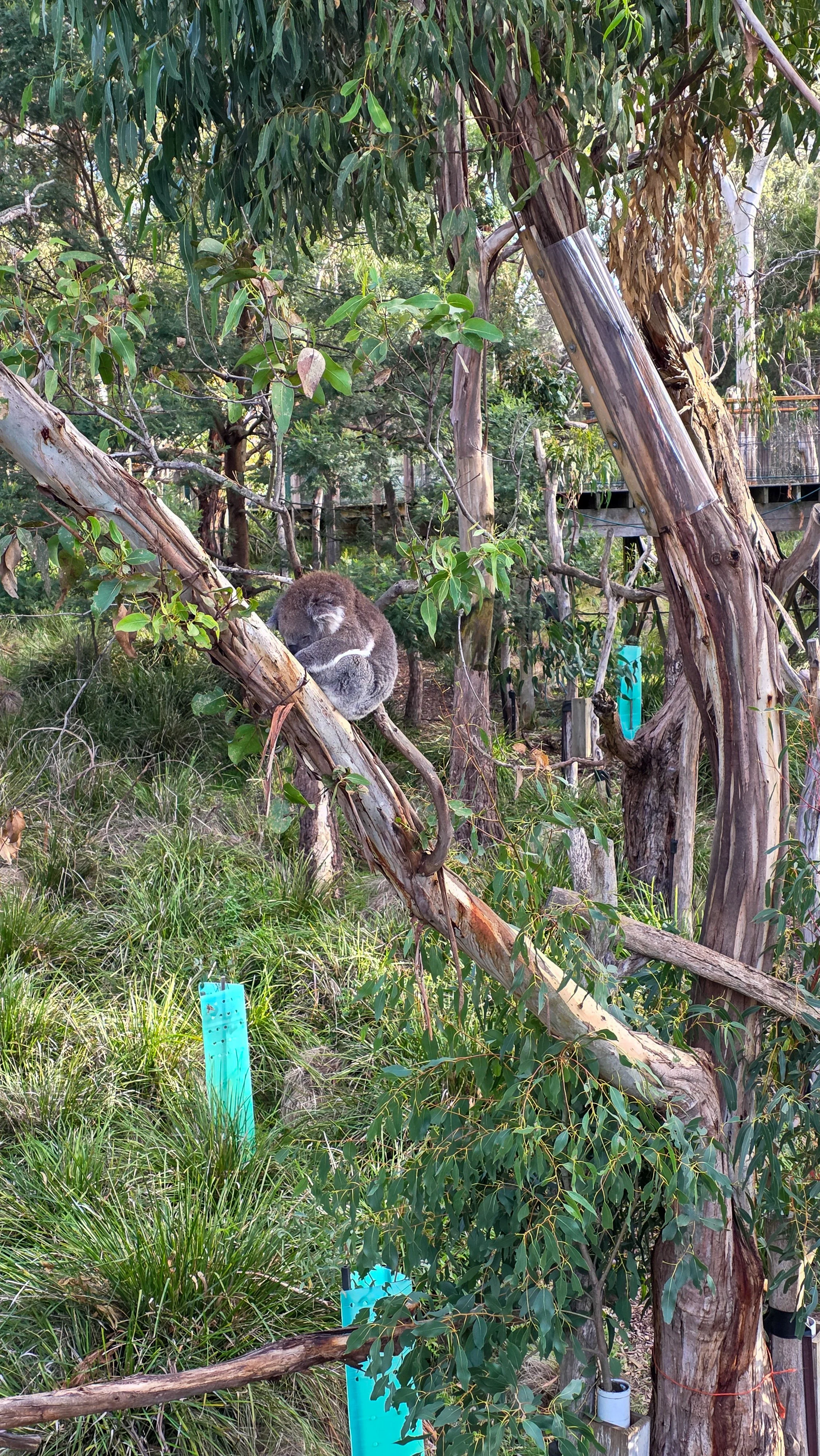
The Lifespan Difference That Made Me Stop and Think
One fact from the tour really stuck with me.
We were told that koalas typically live around 12 years in the wild.
In conservation-focused environments, where animal welfare is prioritised and handling is kept to a minimum, they can live up to 24 years.
By comparison, facilities that allow regular holding or close encounters often report significantly shorter lifespans, with some averages sitting closer to 6–8 years according to information provided during the tour.
While many factors influence lifespan, it highlights how important stress reduction and appropriate welfare practices can be for these animals.
As a parent, it's hard not to think about what message we're sending children when we prioritise a photo opportunity over an animal's wellbeing and their overall lifespan.
Why This Matters for Kids
One of the biggest reasons I wanted to share this experience is because of the conversations it sparked with my boys.
We talked about habitat loss.
We talked about conservation.
We talked about why animals behave differently in the wild compared to captivity.
But most importantly, we talked about respect to animals.
I want my kids to grow up understanding that wildlife isn't something that exists for our amusement, and wild animals have their own needs, behaviours and instincts. When we teach children to appreciate animals from a respectful distance, we're helping build empathy and understanding that extends far beyond a single holiday experience.
Those lessons are far more valuable than a photo.
How to Choose Wildlife-Friendly Attractions
If you're planning a family holiday or wildlife experience, a few simple questions can help guide your decision.
Look for experiences that:
Focus on observation rather than interaction
Allow animals to choose their level of engagement
Avoid touching, feeding or handling wildlife
Prioritise education and conservation
Protect natural habitats and behaviours
World Animal Protection encourages travellers to become animal-friendly travellers and choose experiences where wildlife can remain wild.
A simple rule of thumb is this:
If you can ride, hug, cuddle or take a selfie with a wild animal, it's worth asking whether that experience is truly in the animal's best interests.
A Final Thought
The thing I'll remember most from our day wasn't getting close to a koala.
It was standing quietly with the boys as they searched through the trees, pointing excitedly whenever they spotted one tucked high amongst the branches.
It was hearing them ask questions about habitats, conservation and animal welfare.
It was watching them learn that wildlife doesn't need to be touched to be appreciated.
In many ways, I think experiences like this create a much deeper connection to animals than any photo and animal-handling ever could.
Because when we allow animals to remain wild, we get to witness something far more special: their natural behaviours, their true personalities, and the environments they were always meant to live in.
That sparks conversation.
For our family, that's the best way to see a koala. And hopefully, it's the kind of wildlife tourism more families choose in the future.